OculloSpace Sdn. Bhd., in collaboration with its partner universities, is proud to announce the successful completion of the Decimal-Sat1 PocketQube Satellite Program, Malaysia’s pioneering student-led initiative focused on hands-on small satellite engineering and space systems education.
The program brought together selected university students for an intensive 80-hour learning journey, carefully structured to bridge foundational satellite theory with practical, real-world application. Designed to cultivate early-stage space engineers, the program provided students with direct exposure to the complete lifecycle of a PocketQube satellite — from system fundamentals to functional prototype development.
A Structured Learning Journey: From Theory to Hands-On Assembly
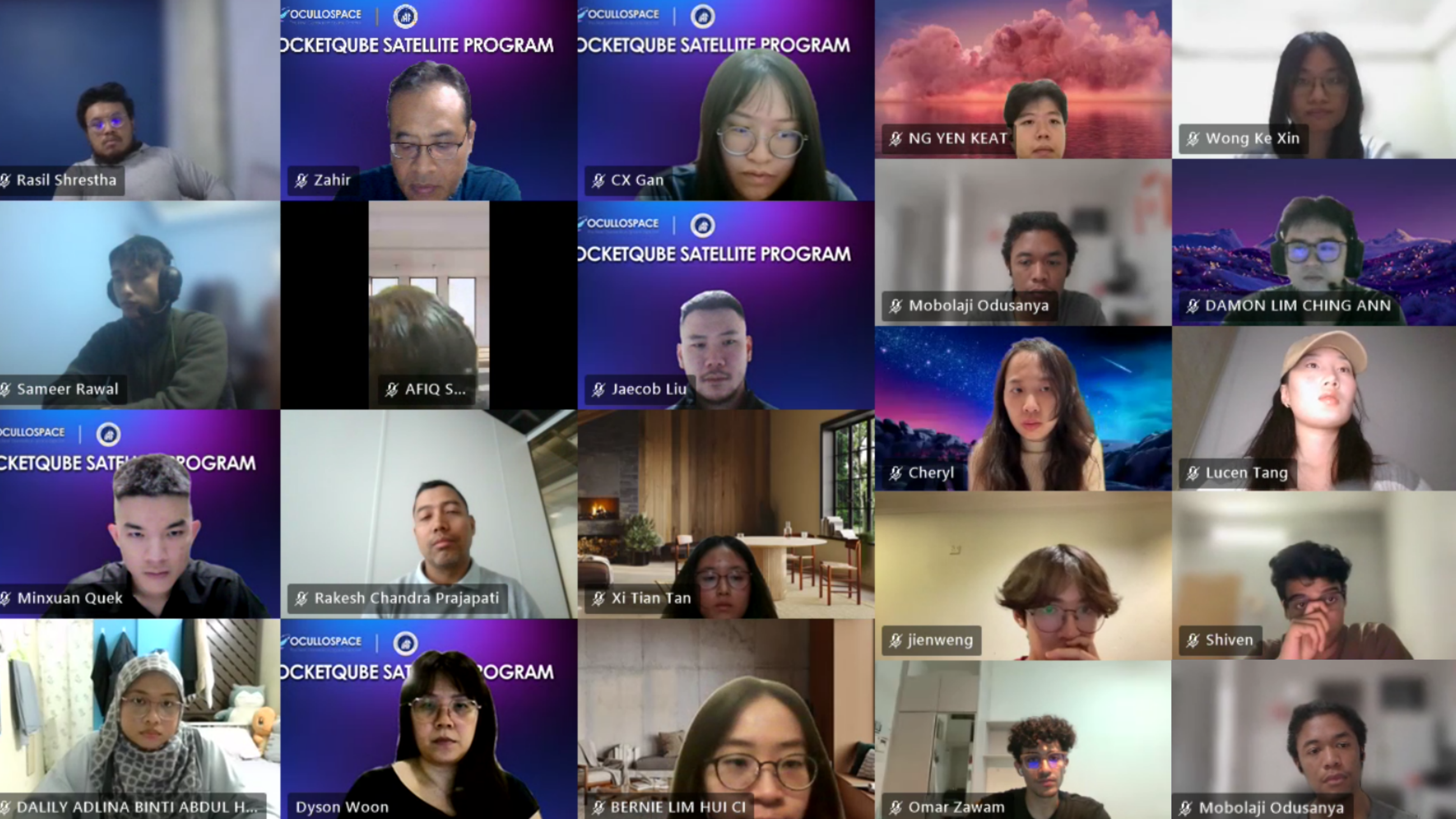
The program commenced with a 40-hour online learning phase, conducted from mid-December to mid-January. During this phase, students were introduced to essential spacecraft engineering concepts through guided learning modules, technical documentation, recorded lectures, and interactive review sessions. Core topics included pico- and nano-satellite architecture, electrical power systems, onboard computers, thermal design, communication fundamentals, orbital mechanics, regulatory considerations, and mission readiness planning.
Special emphasis was placed on launch preparation concepts, including deployment mechanisms, orbit dynamics, and an overview of the confirmed Decimal-Sat1 launch opportunity targeted for March 2026, utilising a SpaceX rideshare mission with deployment services provided by Alba Orbital. These sessions enabled students to understand how small satellites transition from laboratory prototypes into launch-ready payloads.
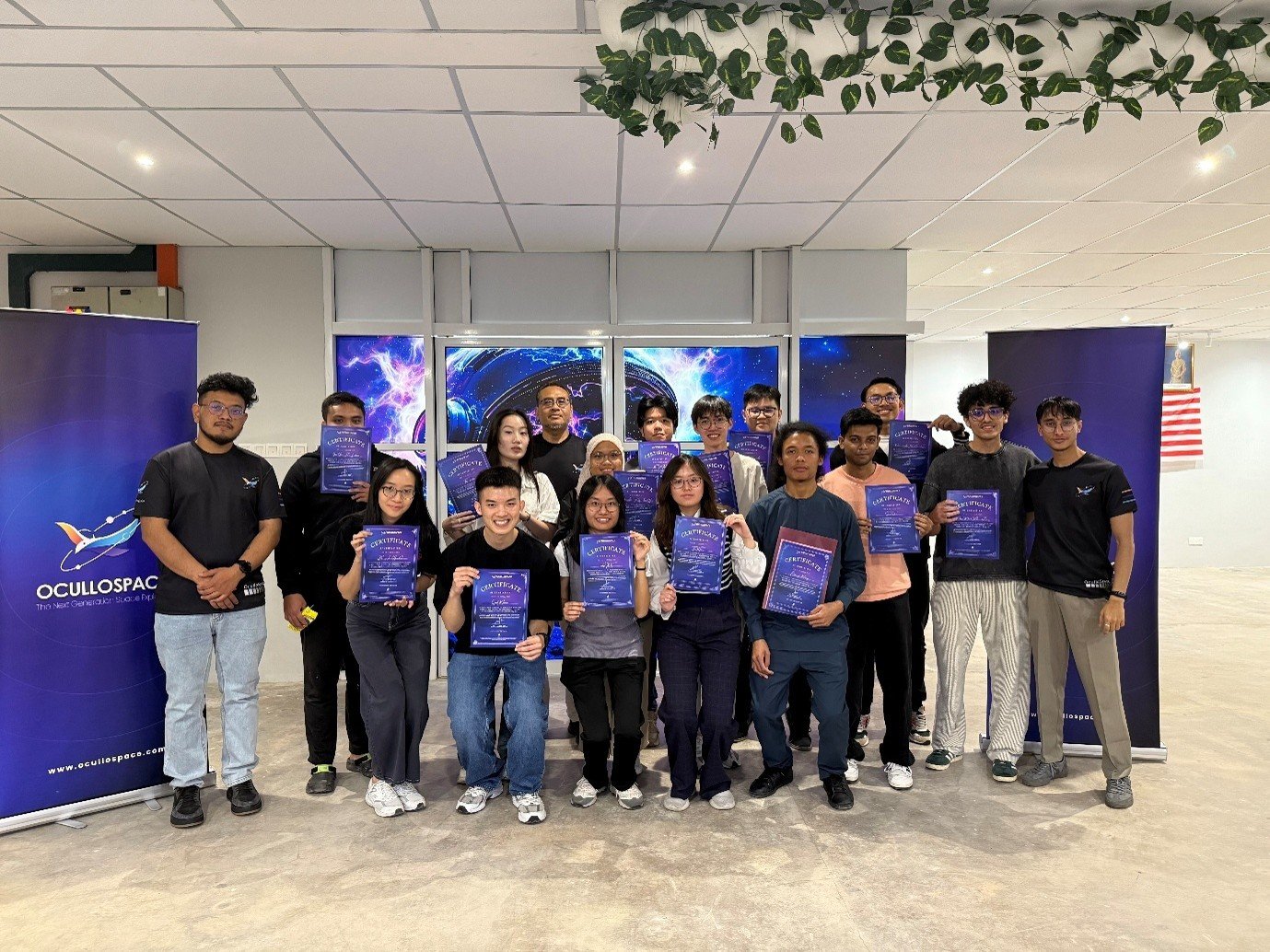
The program then progressed into a 40-hour onsite hands-on phase, where students applied their theoretical knowledge through structured practical activities. Under the guidance of OculloSpace engineers, participants assembled and programmed CUBEEK and PikoQube kits, gaining direct experience in mechanical assembly, subsystem integration, embedded programming, and basic communication testing.
Building a Functional PocketQube Prototype
The Decimal-Sat1 project culminated in the development of a functional PocketQube satellite prototype, designed to demonstrate a simple, low-cost communication link between a pocket-sized satellite and a ground station. Through this process, students learned the fundamentals of uplink and downlink communication, including the transmission and reception of basic data packets, while adhering to real mission constraints and engineering standards.
Beyond technical skills, the program also emphasized teamwork, system-level thinking, documentation discipline, and professional engineering practices — key competencies required in the global space industry.
Advancing Student Space Education in Malaysia
The Decimal-Sat1 PocketQube Satellite Program represents a significant milestone in Malaysia’s growing space ecosystem. By providing students with meaningful exposure to satellite hardware, mission planning, and launch considerations, OculloSpace and its university partners are jointly nurturing the next generation of space engineers and innovators.
OculloSpace extends its sincere appreciation to the participating universities, faculty members, and students whose commitment and enthusiasm made this program a success. The company looks forward to expanding similar collaborative initiatives that strengthen hands-on space education and industry-academia engagement in the years ahead.